The Themes I Write Toward
I write character-first science fiction about people with secrets, trying to survive futures shaped by believable technology, dangerous cities, powerful systems, and the machines we build around ourselves.
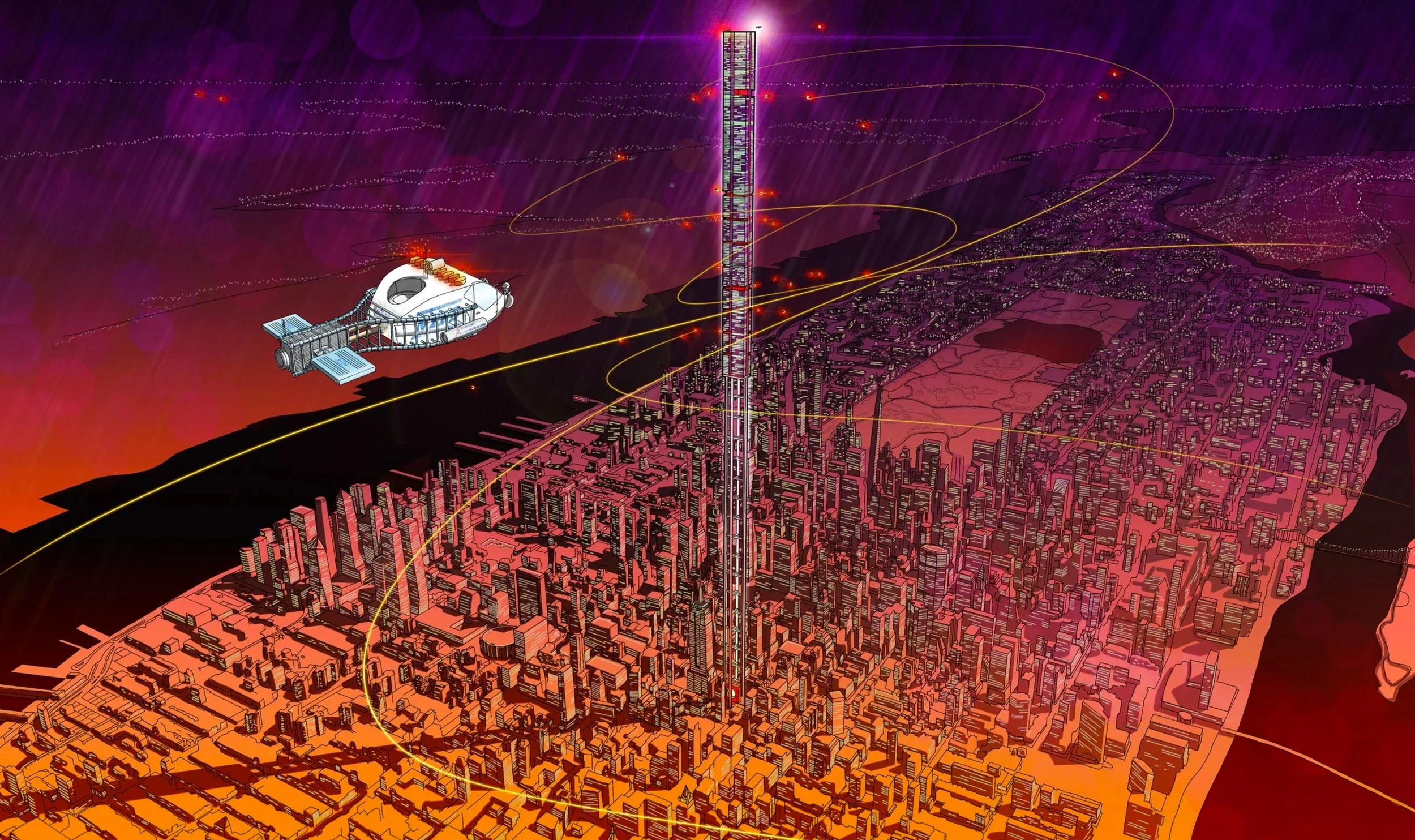
The Alice Yu stories are set in New York roughly thirty years from now, after the technological singularity and in the middle of automation-driven mass unemployment. They are crime stories, thrillers, mysteries, and future-noir stories, but underneath all of that they are about pressure: economic pressure, technological pressure, moral pressure, and the pressure of trying to remain human in a world that has already moved on without asking permission.
I began writing those books around fifteen years ago, when the world of Alice Yu still felt safely speculative. Artificial intelligence, surveillance, algorithmic control, and mass automation seemed like future problems — close enough to worry about, but distant enough to invent around. That distance has collapsed faster than I expected. The strange thing now is that the Alice Yu world does not feel like fantasy so much as a warning arriving early.
That is one of the central themes I keep returning to: what happens when the systems we build become too large, too fast, and too complex for ordinary people to understand or control?
In the Alice Yu stories, that question plays out through crime, murder, secrets, surveillance, damaged families, corrupt institutions, artificial intelligence, and bad decisions made under impossible circumstances. I am interested in the person standing inside the machine, not just the machine itself. The technology matters because of what it does to people: how it changes their work, their choices, their privacy, their loyalties, their fears, and their sense of who they are.
I write about people with secrets because secrets are where character and world collide. A secret is never just personal. It belongs to a system: a family, a corporation, a city, a government, a machine, a crime, a memory, a past that refuses to stay buried. The future does not remove those things. It amplifies them.
That is why I keep writing about dangerous cities and damaged futures. I do not believe science fiction has to predict the future, but I do think it should pay attention. It should notice what is already happening and push it harder, further, stranger, until the shape of the thing becomes visible. AI, automation, inequality, surveillance, climate pressure, off-world ambition, corporate power — these are not abstract ideas to me. They are story engines. They create the conditions under which people reveal who they really are.
Fleet Obscura grows from the same instincts, but moves the lens much further out.
Where Alice Yu looks at a near-future New York under pressure, Fleet Obscura is set in the same wider universe roughly a thousand years later. That larger timescale opens the door to deep space, stranger civilizations, expeditionary vessels, technical cultures, unknown systems, frontier worlds, and the records left behind by people pushing into the unmapped reaches of space.
But the themes remain connected.
Fleet Obscura is still about people and systems. It is still about survival, secrecy, ambition, failure, danger, and the machinery we build to carry ourselves into the unknown. It asks what remains human after centuries of technology, migration, conflict, adaptation, and distance. What does civilization become when it is no longer centered on Earth? What do people carry with them? What do they forget? What do they rebuild? What do they lie about?
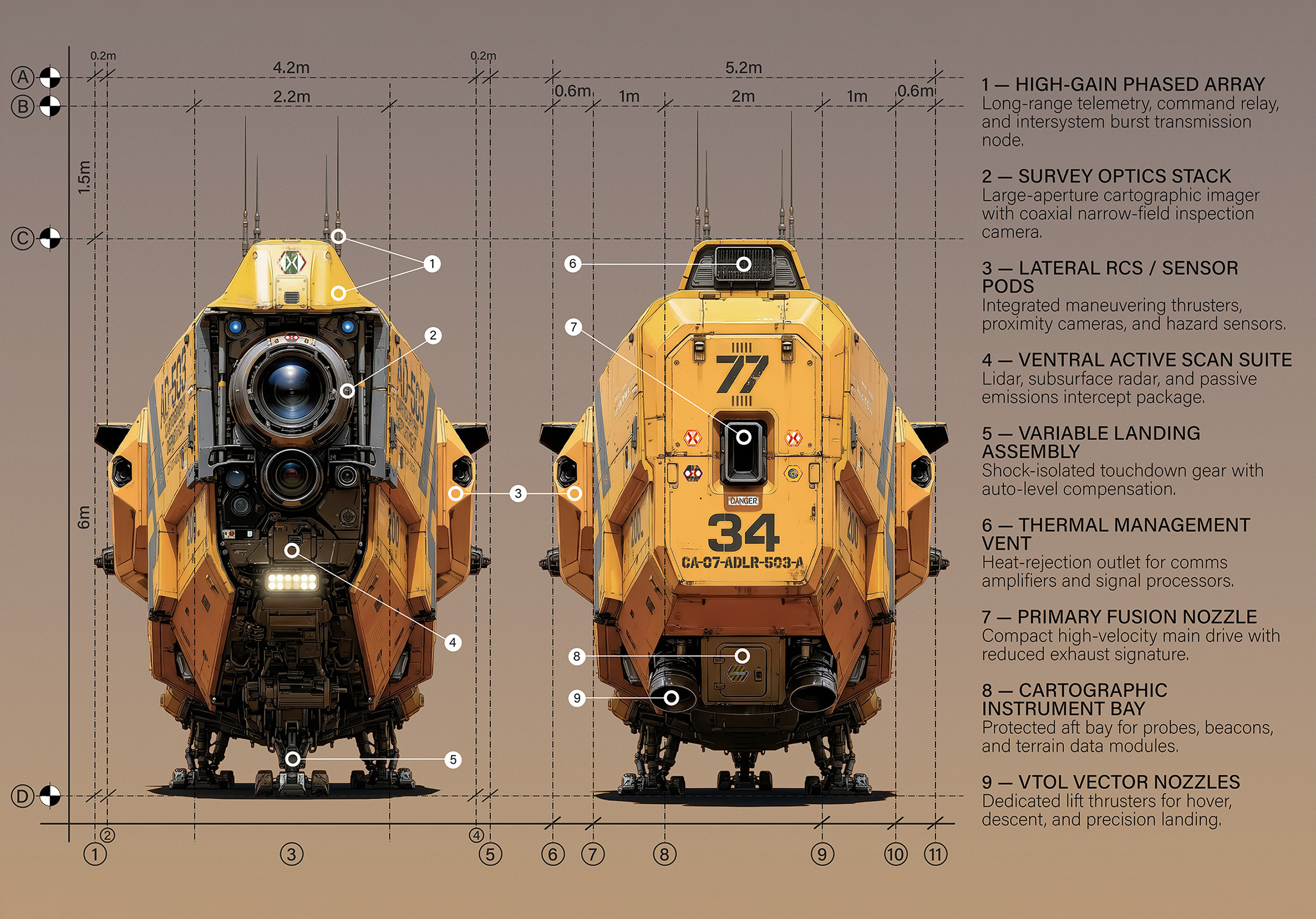
It also lets me explore one of my deepest creative obsessions: the idea that a world becomes believable through its evidence. Ships, schematics, warning labels, technical records, expedition reports, damaged hulls, strange machines, orbital facilities, industrial ruins — these are not just background details. They are fragments of story. They suggest history, labor, bureaucracy, conflict, repair, accident, ambition, and use.
That comes directly from architecture. Architecture teaches you that every object and place has consequences. A door, a corridor, a city, a machine, a ship — each one shapes behavior. Each one tells you what a civilization values, fears, hides, and needs. I bring that way of thinking into the fiction. I want the worlds to feel designed, but not polished. Inhabited, strained, patched, regulated, misused, and alive.
So the themes I write toward are not small ones: humanity after AI, work after automation, identity under surveillance, civilization beyond Earth, the moral weight of technology, the loneliness of deep space, and the secrets people carry through all of it.
But at the center, it always comes back to the same thing.
People under pressure.
People with secrets.
People trying to survive the future we have built around them.
Jim